Silence is the hardest instrument to play in television comedy.
Most performers rush to fill the dead air with punchlines, frantic gestures, or loud reactions.
Tim Conway understood the exact opposite.
He knew that stretching a single second of anticipation into an eternity could bring a live studio audience to its knees.
Few sketches from the golden era of variety television prove this mastery better than his appearance as the world's oldest torturer on The Carol Burnett Show.
Running eight minutes and thirty seconds, the classic medieval dungeon segment takes a familiar melodramatic setup and dismantles it at a glacial pace.
The premise is pure Saturday night theatrical camp.
A tyrannical villain holds a captive princess strapped firmly to a wooden torture rack.
His demand is simple and absolute.
Either the princess agrees to marry him, or she will face the unimaginable horrors of his royal torture chamber.
To break her spirit, the villain summons his most feared and seasoned executioner.
Enter Tim Conway.
Instead of a towering, muscular brute wielding instruments of terror, out shuffles a frail, hunched-over elderly man who looks like he might lose a fight with a stiff breeze.
This is Conway's beloved recurring persona, the Oldest Man, transplanted into the Dark Ages.
From the very first frame of his entrance, the physical comedy establishes an unstoppable rhythm.
Every micro-movement is calculated.
Conway drags his feet across the stone floor with agonizing deliberation, his knees bent, his back curved, and his face frozen in a blank, watery-eyed stare.
The studio audience begins laughing before he even utters a word or touches a prop.
They know the game.
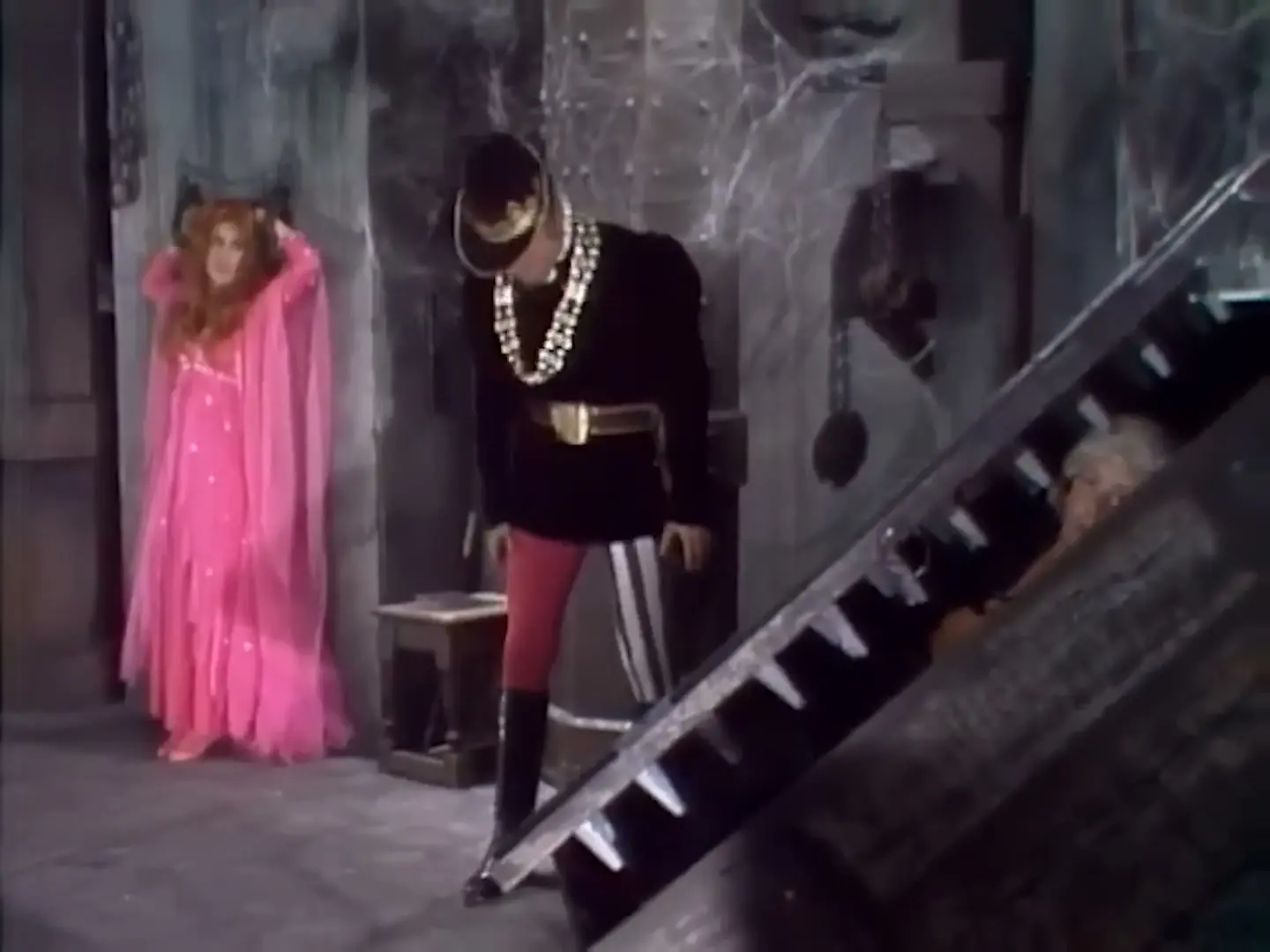
They know that whatever task this ancient torturer is about to perform will take forever, and every agonizing second will be funnier than the last.
The villain barked orders, growing visibly impatient as his fearsome henchman inches toward the rack.
Meanwhile, the captive princess remains tied down, forced to watch her impending doom approach at less than a mile per hour.
The brilliance of The Carol Burnett Show always rested on the chemistry among its cast members and their willingness to let a bit breathe.
Rather than cutting away or speeding up the pacing, the cameras hold steady on Conway's shuffling frame.
You can practically feel the collective anticipation building inside the studio.
Around the four-minute and forty-eight-second mark, the sketch delivers one of its most iconic visual gags.
To intimidate the stubborn princess, the torturer retrieves a glowing red-hot iron poker from the coals.
The threat is immediate and visceral.
The villain warns the prisoner that the searing metal will soon touch her skin if she refuses his proposal.
Then begins the journey across the dungeon.
Conway grips the handle of the hot iron and starts his signature shuffle toward the rack.
Step by tiny step, he inches forward.
Five seconds pass.
Ten seconds pass.
Twenty seconds pass.
The audience howls as the sheer absurdity of the delay sinks in.
By the time Conway finally reaches the rack and presses the iron firmly against the princess's arm around the five-minute and thirteen-second mark, the glowing red tip has completely cooled down.
There is no sizzle.
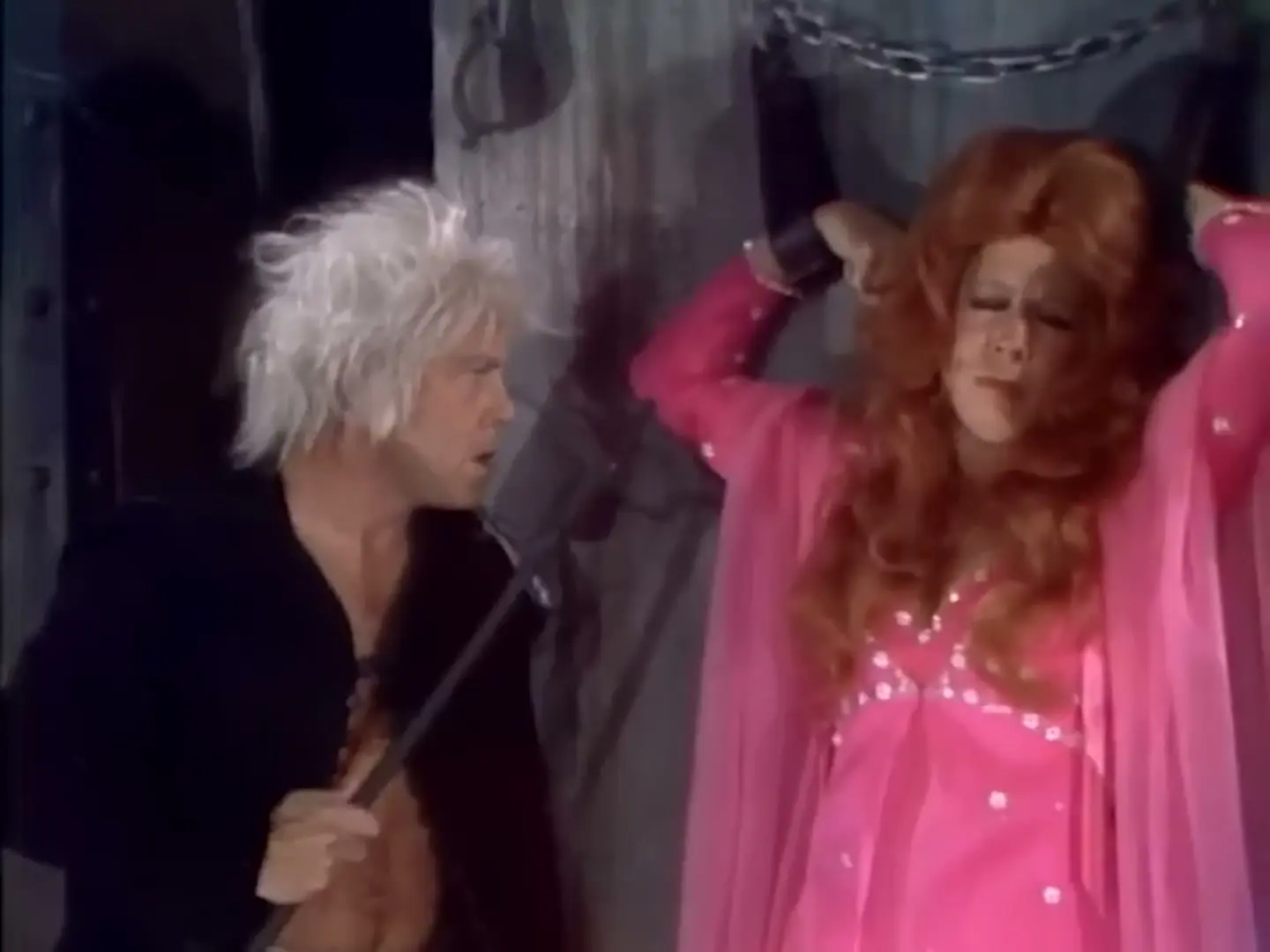
There is no scream.
The princess does not even flinch.
She simply looks at the cold metal resting on her arm, completely unfazed, while the villain stares in disbelief at the total failure of his torture device.
Conway's expression never changes.
He treats the lukewarm poker as if he has just delivered a masterclass in medieval interrogation.
It is a textbook lesson in comedic payoff, proving that the setup is everything when executed by a master of physical timing.
Yet the villain refuses to surrender his plan.
If fire will not break the captive royal, brute force surely will.
As the sketch passes the six-minute mark, the ancient torturer is tasked with wielding a heavy, spiked medieval mace.
Once again, the contrast between the lethal weapon and the frail operator creates instant tension.
Around six minutes and fourteen seconds into the broadcast, Conway struggles just to lift the massive spiked ball off the floor.
His tiny frame trembles under the weight.
He hoists the weapon upward, gathering every ounce of strength in his hunched body to swing it toward the helpless prisoner.
When he finally lets the momentum carry the mace around, physics takes over.
The heavy iron ball swings wide, spinning the elderly torturer completely off his feet.
Instead of striking the princess, Conway loses control and knocks himself flat onto the hard dungeon floor.
By six minutes and forty-one seconds, the dreaded executioner is out cold, defeated entirely by his own weapon.
The sudden shift from slow-burn tension to abrupt slapstick chaos triggers another wave of thunderous laughter from the crowd.
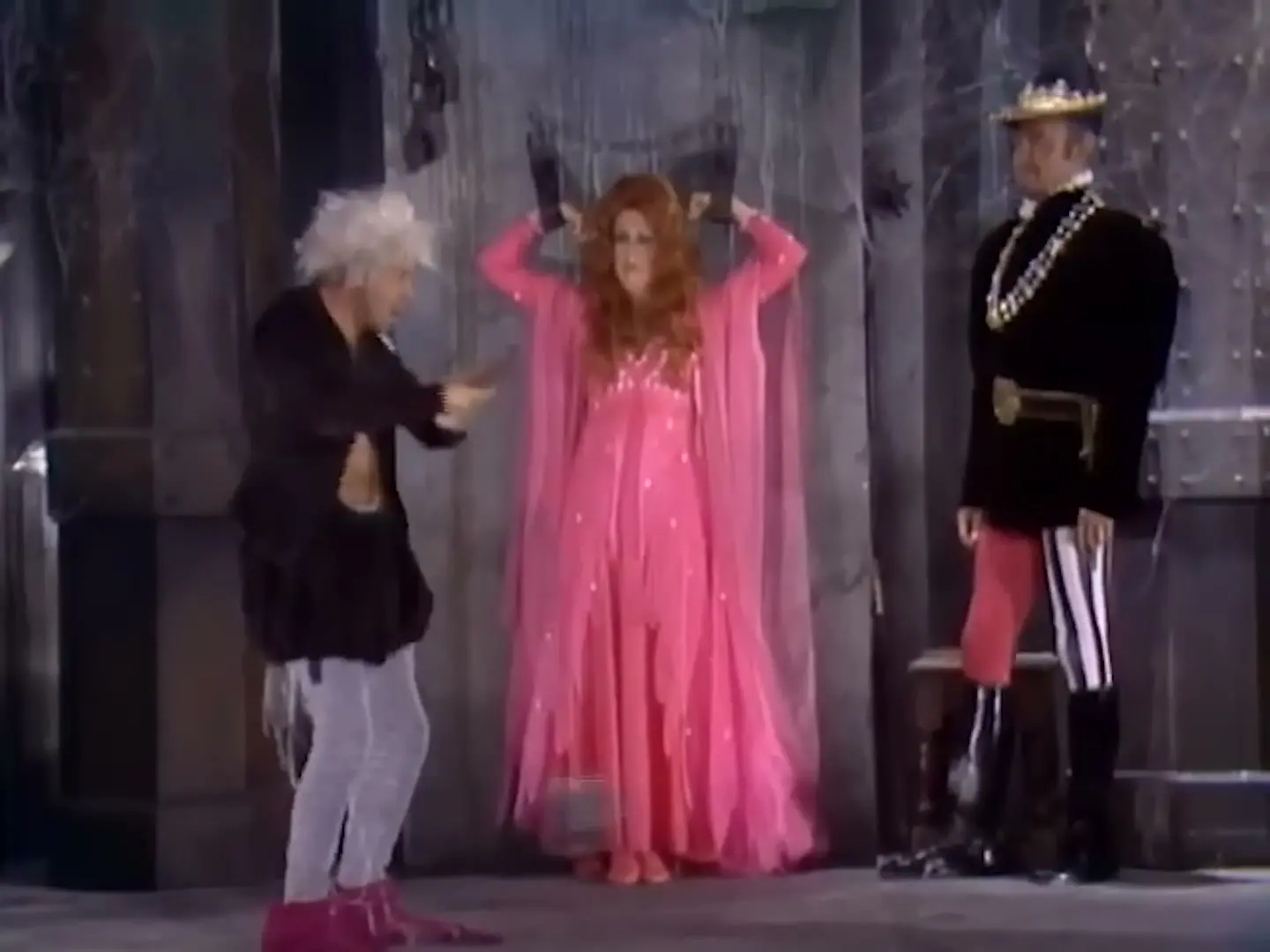
Throughout the entire ordeal, the captive princess endures every botched attempt without shedding a tear or begging for mercy.
She lies strapped to the wooden frame, watching the villain's grand display of cruelty unravel into a comedy of errors.
Eventually, the sheer incompetence of his torturer wears the villain down.
Realizing that his prisoner will never break and that his dungeon holds zero actual threat, the captor throws up his hands in frustration.
He admits defeat.
He gives up on the ultimatum and begins to walk away, abandoning his scheme to force her into marriage.
That exact moment, occurring between seven minutes and forty-five seconds and eight minutes and eleven seconds, sets up the final twist.
After surviving an entire torture chamber without flinching, the princess suddenly calls out just as the villain turns his back.
She reveals that she was only playing hard to get.
The reversal lands like a lightning bolt.
Every second of stoic bravery she displayed on the rack was apparently just coy flirtation in her mind.
The comedic timing of the delivery, paired with the physical absurdity of the preceding eight minutes, makes the ending impossible to forget.
Decades after The Carol Burnett Show originally aired, this medieval dungeon sketch remains a benchmark for television comedy.
It requires no special effects, no rapid-fire editing, and no vulgarity to earn its laughs.
Instead, it relies on the timeless power of commitment to a character.
Tim Conway never winked at the camera or broke his glacial pace to hurry toward a joke.
He trusted the silence, trusted the audience, and trusted the inherent humor of a fragile old man trying to do a young monster's job.
Watching the sketch today feels like stepping into a masterclass where every stumble, shuffle, and deadpan stare hits with surgical precision.
Great physical comedy never ages, and as long as audiences appreciate the art of the slow burn, Tim Conway's shuffling torturer will keep stealing the show.
Watch full video here: