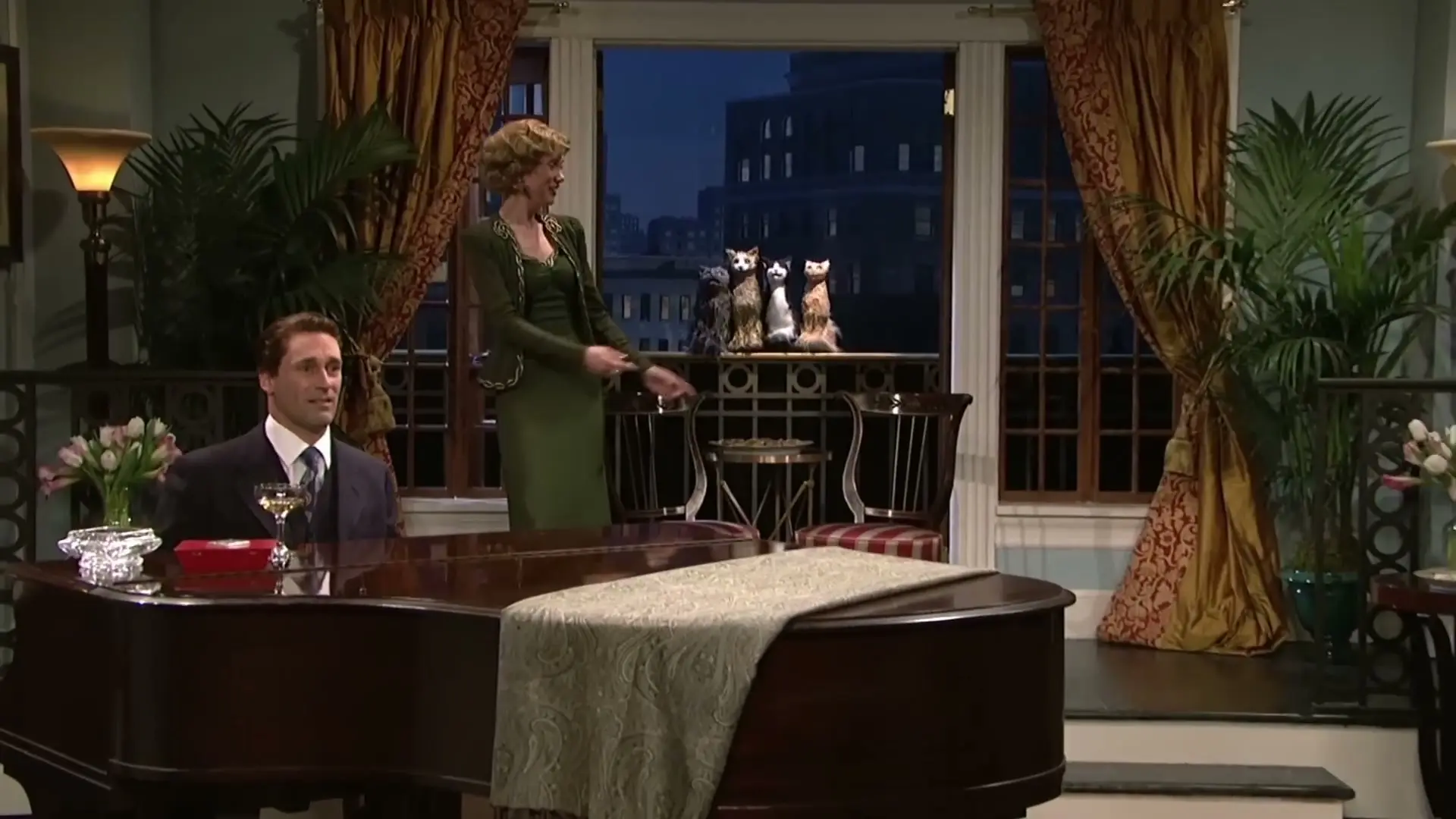
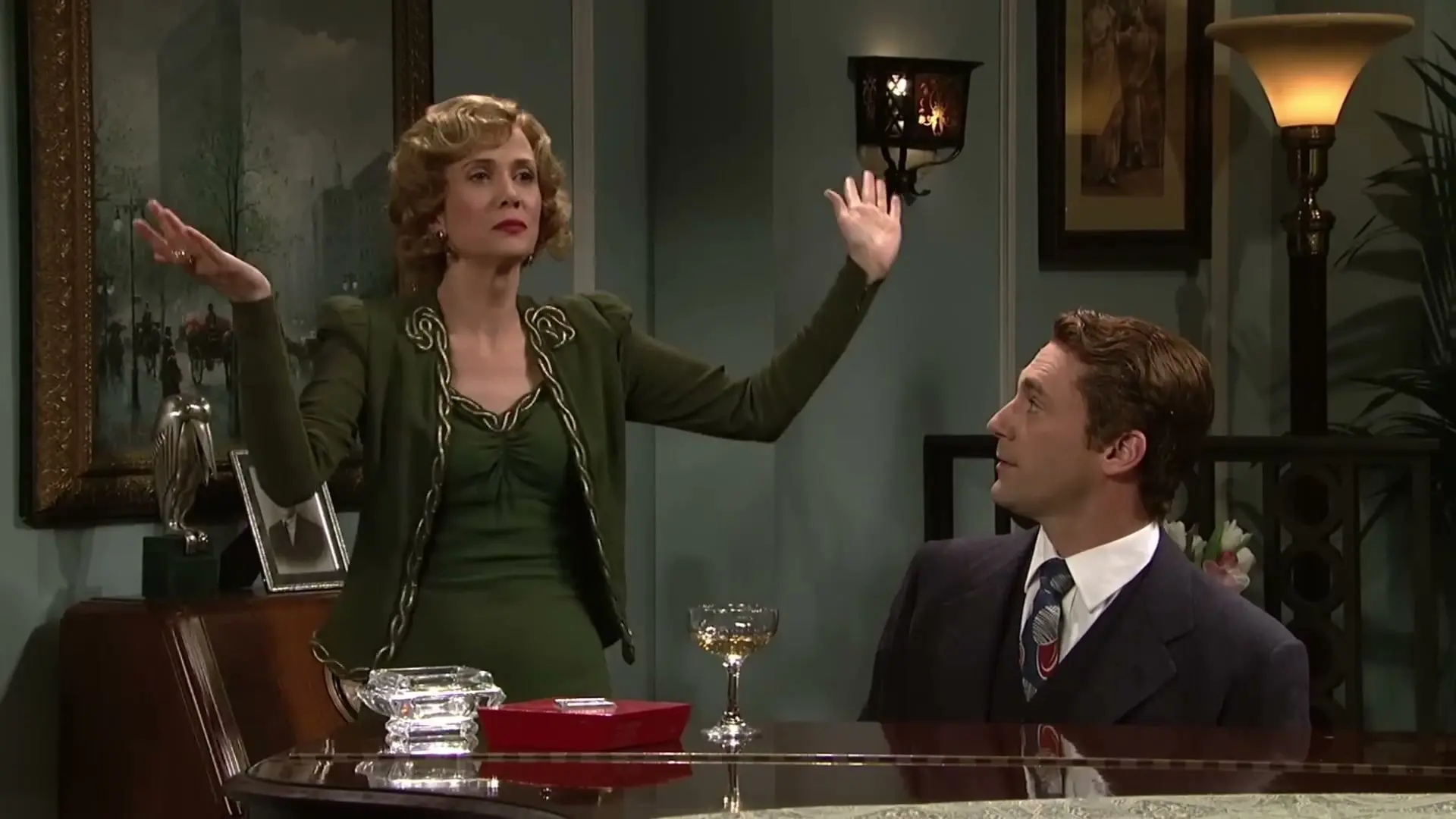
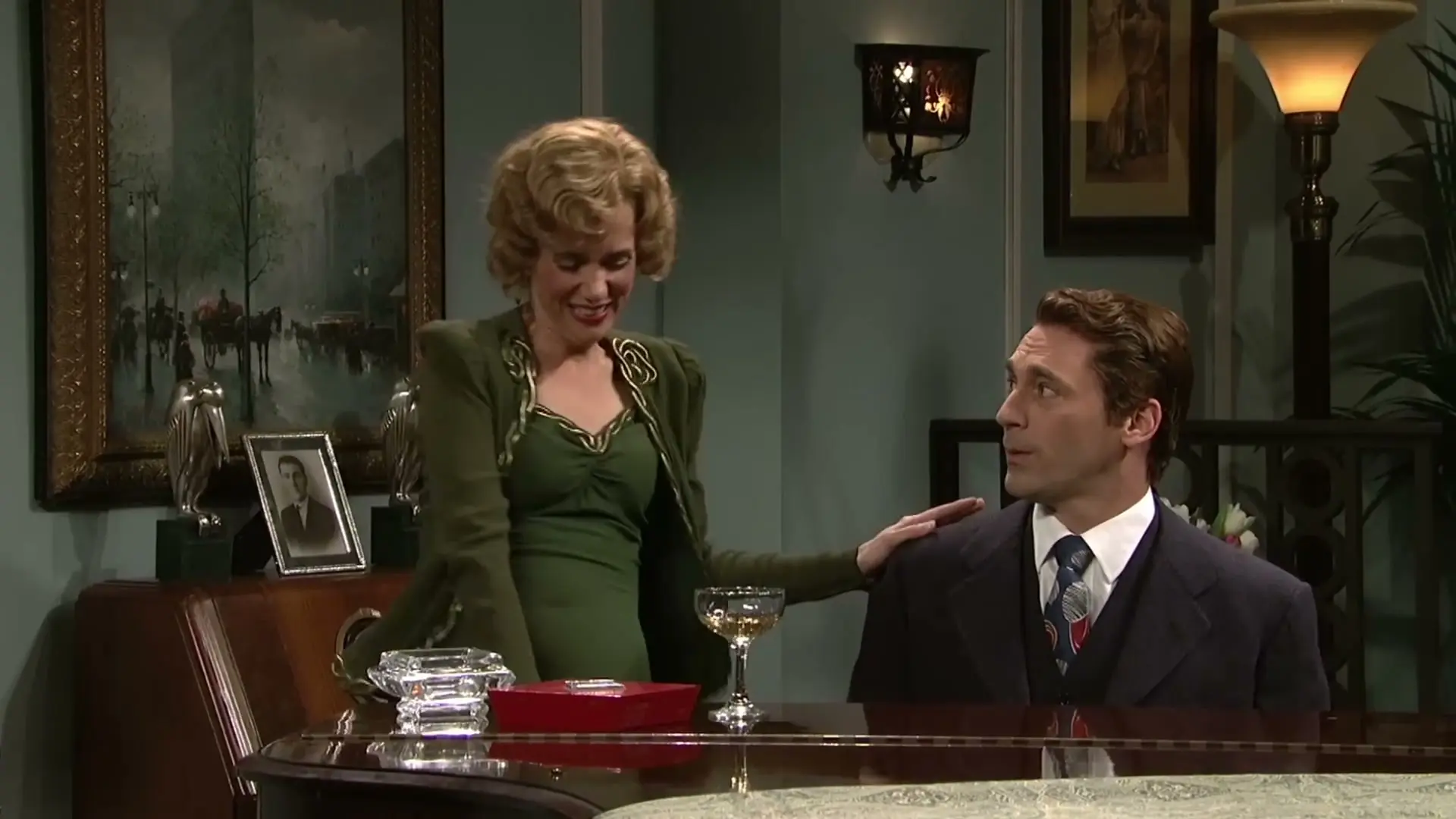
Three words whispered into a microphone turned a routine Saturday Night Live talent show parody into an unforgettable piece of absurdist television.
The sketch runs less than six minutes, yet it lingers in the mind long after the studio audience stops laughing.
At the center of the madness is Angelo, a contestant whose commitment to inexplicable behavior breaks every rule of conventional variety show comedy.
Modern late-night television often relies on topical punchlines or recognizable celebrity impressions to hold the attention of distracted viewers scrolling through their feeds.
The Angelo sketch rejects that formula entirely.
Instead, it builds an entire comedic universe out of awkward pauses, theatrical stares, and a baffling refusal to answer simple questions.
From the moment Angelo steps onto the stage, the energy in the room shifts.
The setup looks familiar enough, mimicking the glossy, high-stakes atmosphere of a televised talent competition where hopeful performers face a panel of skeptical judges.
Viewers expect a bad singer, a clumsy magician, or an overly confident dancer.
Angelo offers none of those easy tropes.
He stands before the panel with an expression that blends intense focus with complete bewilderment.
When a judge asks a straightforward question to clarify the concept behind his performance, the scene hits its first major comedic turning point.
Rather than explaining his routine, Angelo leans toward the microphone, locks eyes with the panel, and delivers a theatrical, whispered response that instantly derails the conversation.
Say for me?
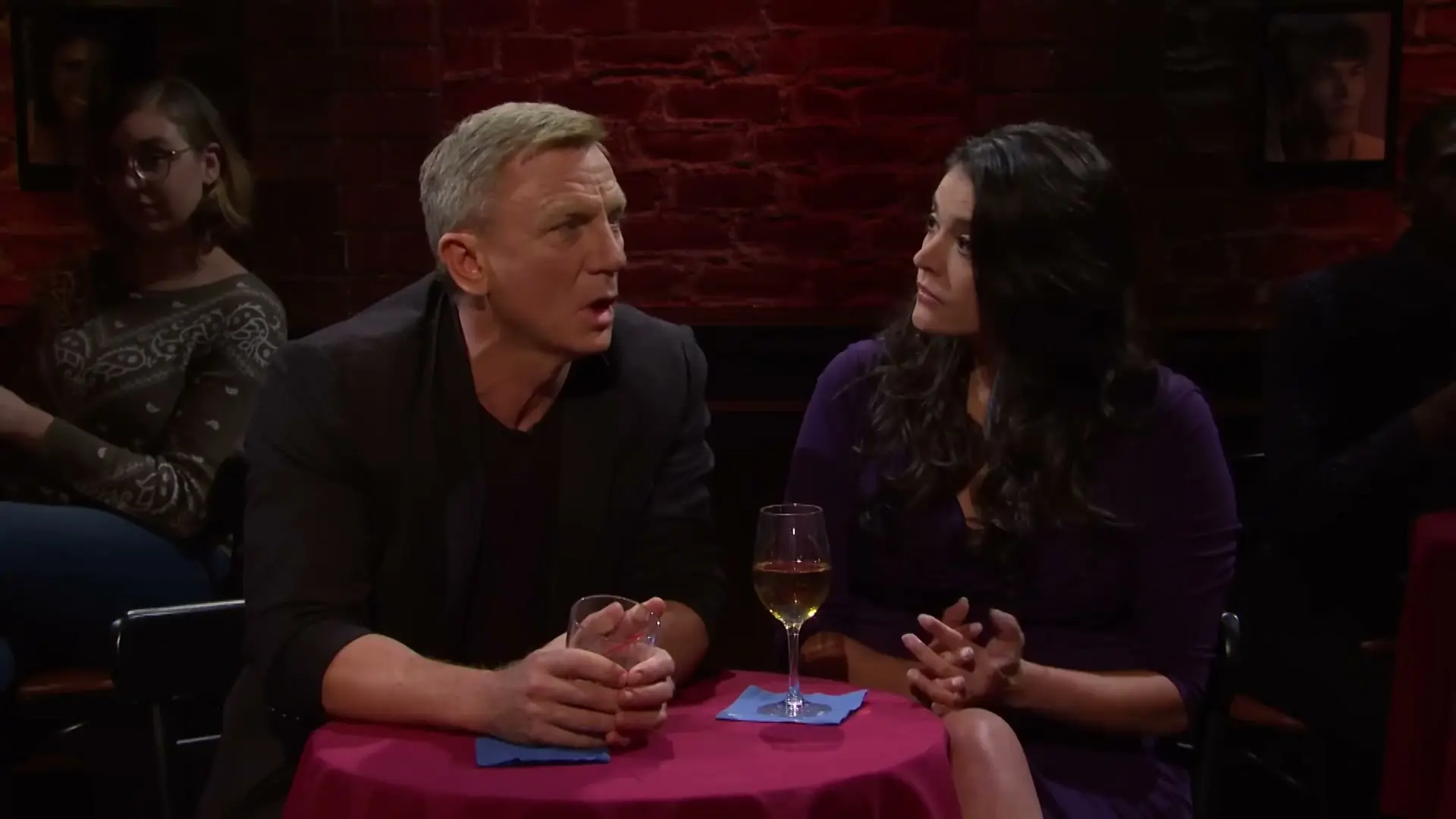
The line lands with surgical precision.
Silence stretches across the stage as the judges try to decode whether the contestant genuinely misheard the question or is executing a bizarre form of performance art.
That specific moment captures the magic of deadpan escalation.
A normal inquiry collides head-on with total, unblinking confusion.
The contrast between the grounded reality of the judges and the surreal interior world of Angelo makes the exchange endlessly rewatchable.
Every second of hesitation amplifies the tension, forcing the audience to lean in and guess what could possibly happen next.
Comedy thrives on surprise, and Angelo refuses to give the panel a single predictable reaction.
Just when viewers think they have figured out the rhythm of his eccentric persona, the sketch takes a sharp, terrifying turn.
Roughly halfway through the five-minute-and-forty-seven-second runtime, the tone shifts without warning.
In the middle of his bizarre performance, Angelo abruptly abandons his stiff, deadpan posture and breaks into a frantic, whispered confession.
The transition happens in a heartbeat.
One second he is a stoic, enigmatic oddball, and the next he is gripped by unhinged panic.
His rapid, breathless monologue cuts through the quiet studio like a sudden alarm.
The judges sit frozen in their chairs, watching in stunned silence as the contestant unravels right before their eyes.
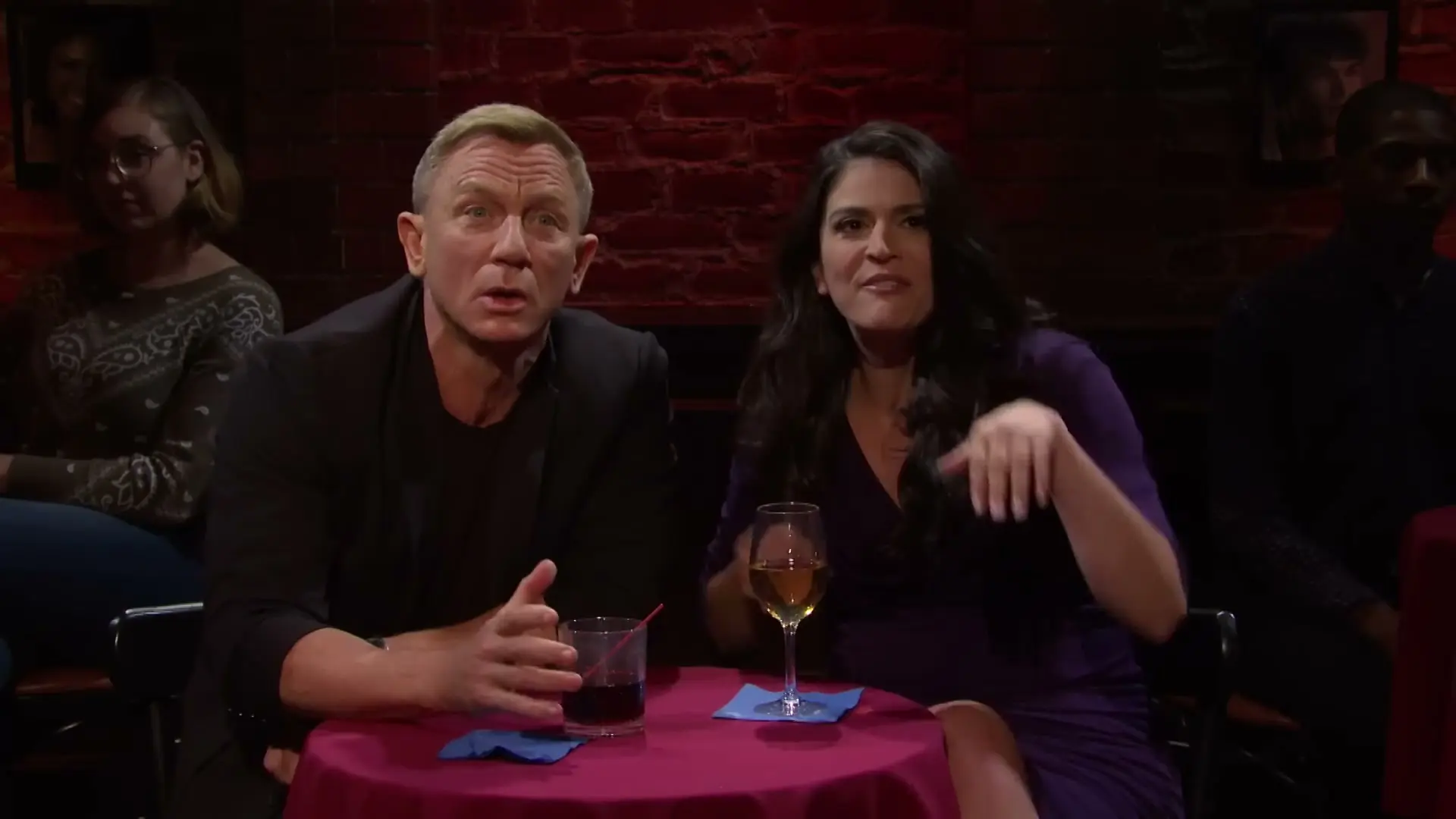
There is no gradual buildup to this sudden eruption of anxiety.
The physical intensity of the delivery catches everyone off guard, turning passive viewers into captive witnesses.
Watching a performer lose control—or brilliantly simulate losing control—creates a primal kind of comedic suspense.
The audience does not know whether to laugh or wince, so they end up doing both at once.
Then, just as quickly as the panic arrived, it vanishes.
Angelo snaps right back into his original act as if the frantic outburst never occurred.
That whiplash pacing defines the brilliance of the sketch.
Great sketch comedy requires total commitment from everyone on stage, especially when the premise defies logic.
If the judges wink at the camera or break character too early, the illusion collapses.
Instead, the panel treats Angelo with the serious scrutiny of real television judges trying to salvage a live broadcast.
Their earnest attempts to stay professional make his bizarre behavior even funnier.
Every furrowed brow and hesitant nod from the judging table grounds the absurdity in reality.
Yet the sketch refuses to settle for a simple dynamic between one weird contestant and three normal evaluators.
To reach its peak, the madness has to spread.
As the performance pushes toward its climax, the boundary between the stage and the judging panel completely dissolves.
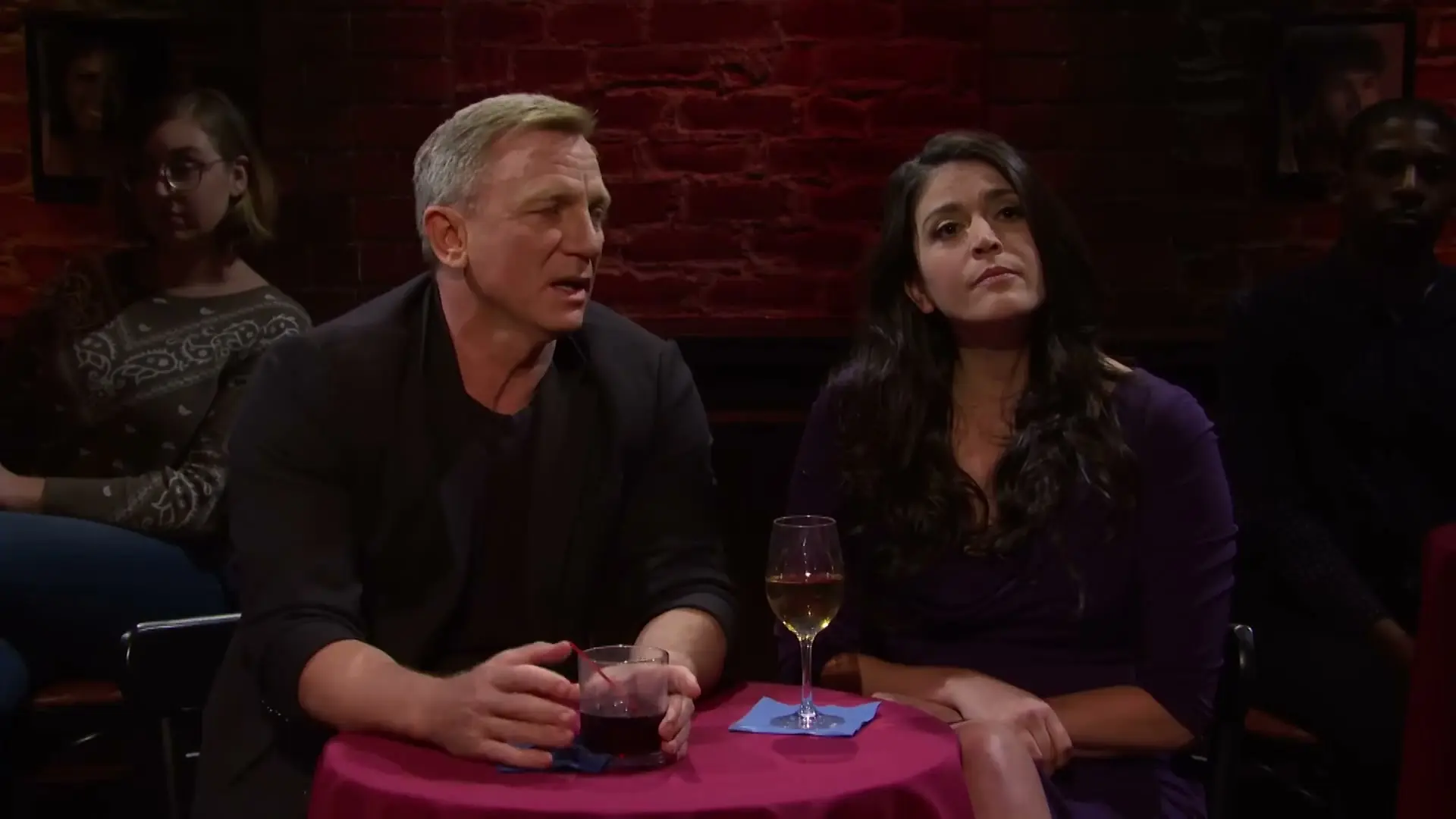
What begins as a skeptical evaluation transforms into an inexplicable display of collective insanity.
One by one, the judges rise from their seats.
Instead of hitting a buzzer or offering constructive criticism, the entire panel joins Angelo in his weird, synchronized dance routine.
The solo cringe moment mutates into a chaotic musical finale.
Seeing authority figures surrender their dignity to mimic a contestant's erratic movements delivers the ultimate comedic payoff.
The escalation feels both completely unearned and entirely inevitable within the twisted logic of the scene.
Viewers stay glued to the screen simply to see how far the group commitment will go before the lights fade.
In an era where viral clips are engineered for instant gratification, the slow-burn weirdness of Angelo stands out.
It trusts the audience to sit with discomfort and rewards their patience with escalating absurdity.
Catchphrases like his signature whispered question work because they are anchored by fearless physical comedy and impeccable timing.
Without the intense stare and the sudden bursts of panic, the words on the page would mean nothing.
Live television remains at its best when performers take big, strange swings that risk total silence from the crowd.
By trading easy jokes for pure, unfiltered surrealism, Angelo proved that confusion can be the sharpest weapon in comedy.
Future late-night sketches would do well to remember that sometimes the funniest answer to a simple question is refusing to answer it at all.
Watch full video here: